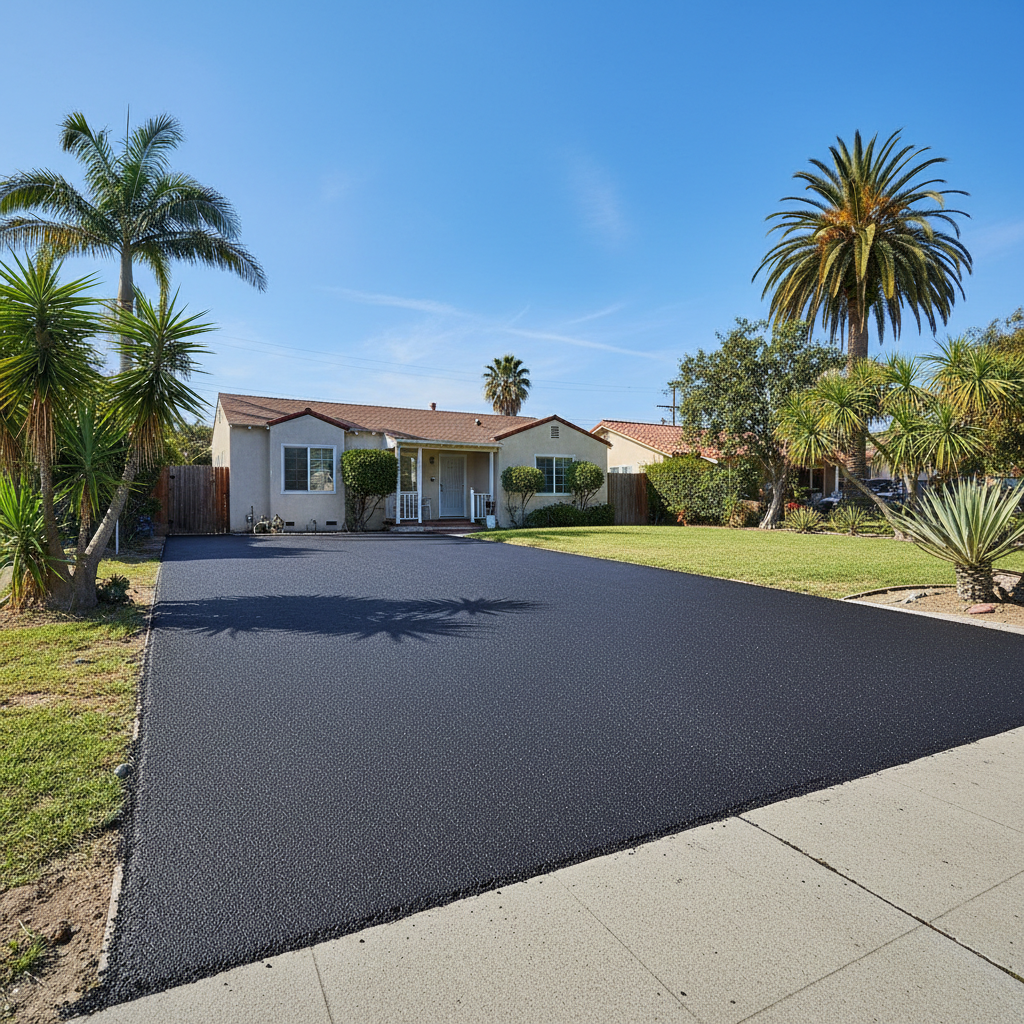
So, you're thinking about getting that driveway paved, huh? Maybe it's all cracked up, or you're finally putting in that new circular drive you've always dreamed of. Whatever the reason, one of the first questions people hit me with is, "What's this going to set me back?" And believe me, I get it. Nobody wants to feel ripped off, especially on a big home improvement project like this.
I'm not about to give you some vague, "it depends" kind of answer. Instead, I'm going to lay out exactly what influences the price of a new asphalt driveway here in Los Angeles, what you can expect to pay, and how you can be sure you're getting a fair shake. This isn't some sales pitch; it's just the straight talk from someone who's been doing this work for a long, long time.
What Really Drives the Price of Your LA Driveway?
A lot of folks figure paving is just a matter of dumping hot asphalt and rolling it flat. If only it were that simple! There are actually several big things that really push the numbers up or down. Understanding these will help you make sense of any quote you get, trust me.
- Size and Shape: This one's probably the most obvious. A small, straight driveway for a single car will definitely cost less than a sprawling, winding one that leads to a three-car garage. The bigger the area, the more material we need, and the more labor hours it takes. Complex shapes, curves, or odd angles also add to the cost because they demand more precise work and often more hand-finishing.
- Existing Conditions & Demolition: Got an old driveway sitting there now? Well, it's got to go. Demolition, hauling away all that debris, and getting the subgrade ready is a pretty big chunk of the job. If your old driveway is concrete, that's usually tougher and pricier to break up and remove than old asphalt. If the ground underneath is soft, unstable, or has poor drainage — which we honestly see a lot in places like the Hollywood Hills, what with all the steep grades and varied soil types — we might need to do extra digging, bring in more aggregate, or even put in specialized drainage solutions. That's not cheap, but it's absolutely crucial for a driveway that actually lasts.
- Material Quality & Thickness: Not all asphalt is created equal, and neither are all paving jobs. A standard residential driveway might get 2-3 inches of compacted asphalt over a good base. But if you've got heavy vehicles, RVs, or just want something super durable, we might suggest a thicker layer, maybe 4 inches, or a specific asphalt mix designed for heavier loads. More material, better quality material, means a higher cost.
- Drainage Requirements: Water is pavement's worst enemy. If your property already has poor drainage, or if the new driveway design could create new water problems, we'll need to deal with that. This could mean putting in French drains, catch basins, or sloping the driveway in specific ways. Good drainage adds to the upfront cost, sure, but it saves you a fortune in repairs down the road.
- Accessibility: Can our equipment easily get to your driveway? If we're working on a tight lot in, say, Silver Lake, or a property with limited access, it can slow things down and require smaller, more specialized equipment, which can increase labor costs.
Typical Cost Ranges for Driveway Paving in LA
Alright, let's talk real numbers. For a standard asphalt driveway in Los Angeles, you're generally looking at somewhere between $4 to $8 per square foot. But remember, this is a pretty broad range, and those factors I just mentioned can definitely push it higher or lower.
- Small Driveway (e.g., 20x20 ft = 400 sq ft): You might expect to pay anywhere from $2,000 to $4,000. This usually covers a basic overlay or a simple removal and replacement without any major subgrade issues.
- Medium Driveway (e.g., 20x40 ft = 800 sq ft): For something this size, you're probably looking at $4,000 to $6,400. This is a common size for a lot of suburban homes, you know?
- Large or Complex Driveway (e.g., 30x50 ft = 1500 sq ft and up, or with significant prep): Here, costs can easily jump to $7,500, $10,000, or even $15,000+. This is where breaking up existing concrete, extensive grading, drainage work, or a thicker asphalt layer really starts to add up.
These numbers typically include the basic steps: demolition (if it's needed), getting the subgrade ready, applying the base layer, and the asphalt paving itself. But always, always get it in writing!
What Should Your Quote Include?
When you get a quote from a reputable company like Los Angeles Diamond Asphalt, you shouldn't have to guess what's covered. A good quote will be super detailed. Here's what you should look for:
- Detailed Scope of Work: It should clearly state what's being done. "Remove existing asphalt," "excavate 6 inches," "install 4 inches of compacted aggregate base," "apply 2.5 inches of compacted asphalt." Specifics, not just generalities.
- Square Footage: The exact area being paved.
- Material Specifications: What kind of asphalt mix, and how thick will it be?
- Demolition & Hauling: Is the removal of the old driveway and getting rid of the debris included?
- Site Preparation: Grading, compaction, base material.
- Drainage: Any planned drainage solutions like catch basins or French drains.
- Permits: Who is responsible for pulling any necessary permits? (Often it's the homeowner, but sometimes the contractor can help out.)
- Warranty: What kind of guarantee do they offer on their work?
- Total Cost: A clear, itemized total.
How to Avoid Overpaying for Your Driveway
Nobody wants to feel like they paid too much. Here’s my advice:
- Get Multiple Bids: Don't just go with the first guy who shows up. Get at least three detailed quotes. This helps you compare apples to apples and really understand the market rate for your specific job.
- Ask for Specifics: If a quote just says "new driveway," that's a huge red flag. Make them break down every single step and material.
- Check References & Reviews: A good contractor will have a track record. Ask for references, look at their past work, and check online reviews.
- Don't Be Afraid to Ask Questions: If you don't understand something in the quote, ask! A good contractor will take the time to explain it to you.
- Beware of Lowball Offers: If one quote is drastically lower than the others, be very, very cautious. They might be cutting corners on materials, skipping crucial prep steps, or not properly insured. That "deal" will probably cost you more in repairs later.
- Understand the Payment Schedule: Don't pay for the whole job upfront. A reputable contractor will usually ask for a deposit (20-30% is pretty common) and then final payment once you're happy with the completed work.
Getting a new driveway is an investment in your home. Do your homework, ask the right questions, and don't rush into anything. You'll end up with a smooth, durable driveway that adds value and curb appeal for years to come.